Solutions    Optical Sorting

Optical Sorting Technology

Sorting of all products with changing and ambitious geometries

IFSYS, a specialist in feeding technology, is setting new standards in sorting technology.

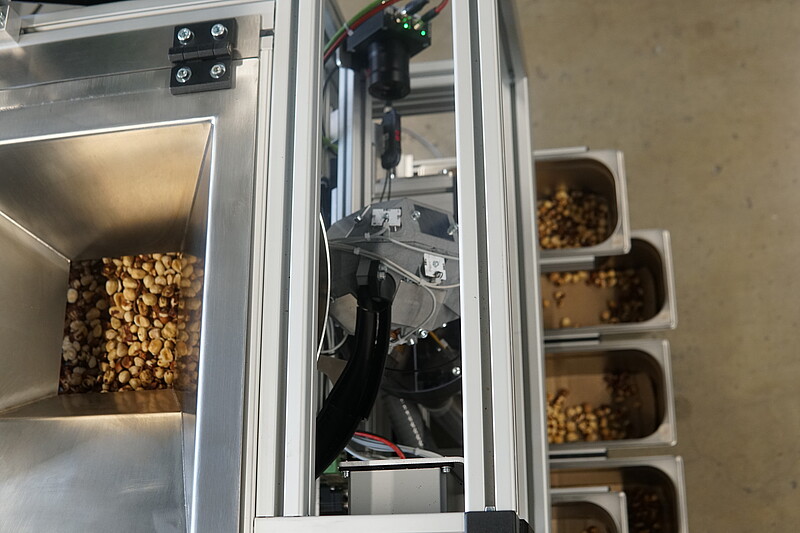
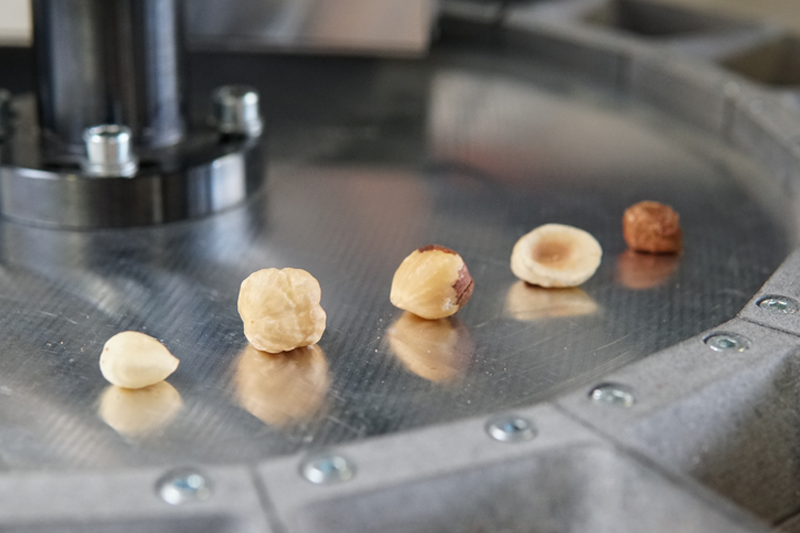
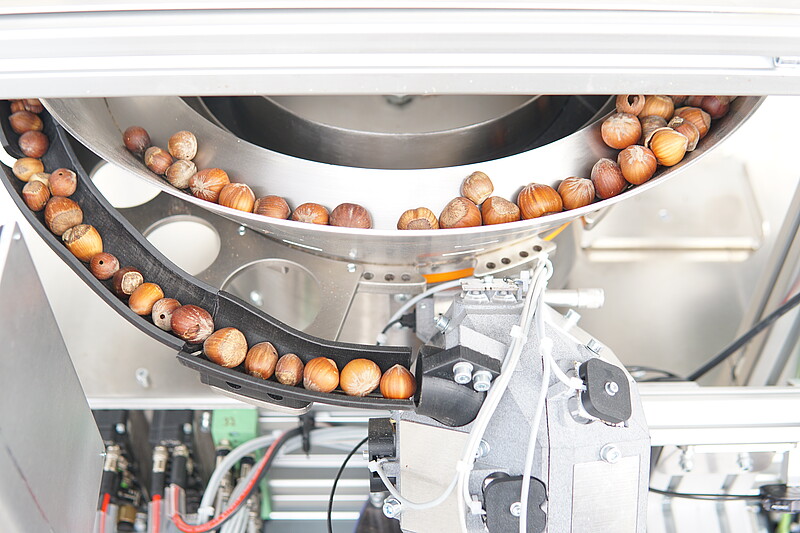
Optical sorting technology, using the example of hazelnuts, enables the reliable detection, classification, and preparation of products with varying, irregular, or complex geometries for downstream processes.

Optical sorting technology not only significantly increases the efficiency and accuracy of the sorting process, but also opens up new possibilities for quality control and adaptation to specific requirements in agriculture, the agricultural sector, and the food industry.

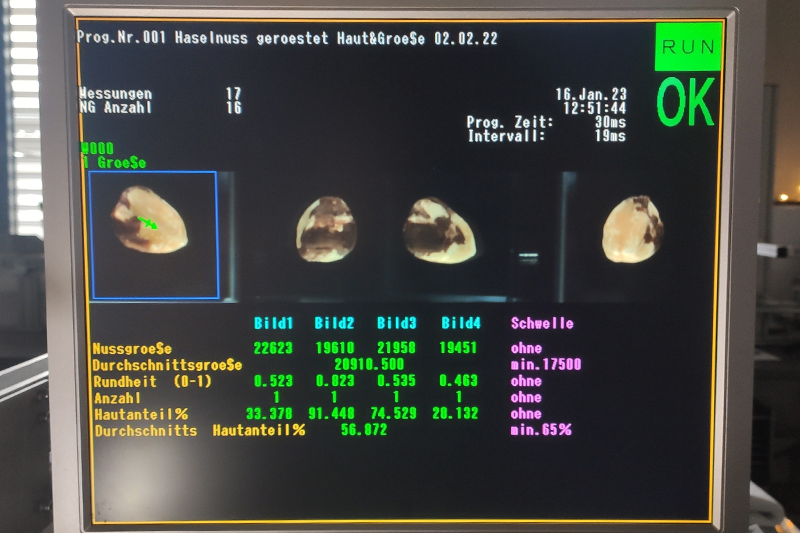
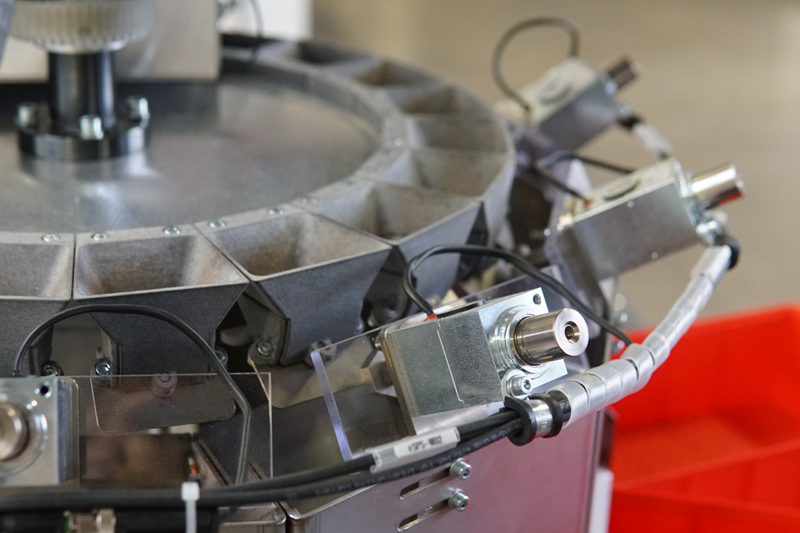
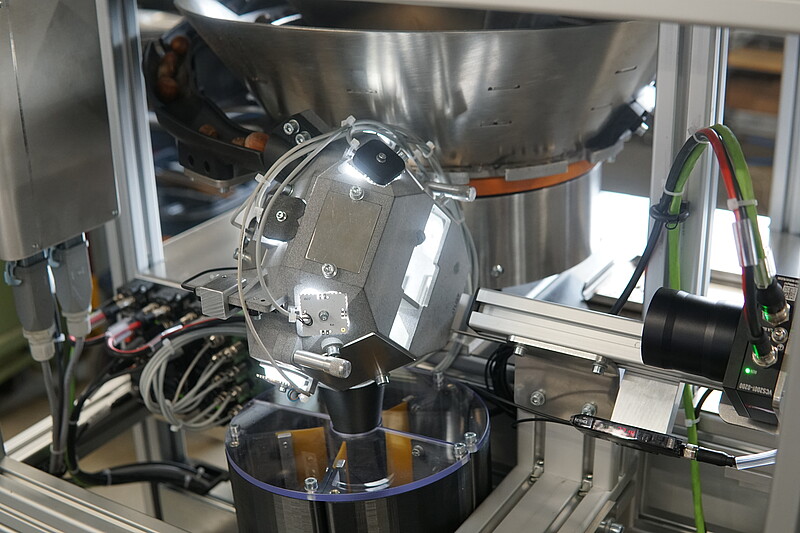
Instead of individual inspection points, the entire surface is captured without contact using light, cameras, and optical sensors. High-resolution data sets enable the detection of even the smallest deviations in shape and color, while the 360° panoramic view ensures a complete inspection.

>> Download Datasheet​


The facts speak for themselves


Optical sorting technology at a glance


  • 360° inspection: Complete surface analysis for reliable sorting results
  • Gentle handling: Contactless sensors protect the product
  • AI-supported evaluation: Classification by color, shape, size, and surface texture
  • High consistency: Consistent standards through objective criteria
  • Flexibility: One machine can process multiple products
  • Self-sufficient: Can be used independently depending on the level of automation
  • Ease of use: Intuitive controls, less manual intervention

Maximum product quality through intelligent sorting


Classification of sorted goods with changing and demanding geometries

With IFSYS optical sorting technology, you benefit from significantly higher product quality and safety, as each item is reliably, objectively, and reproducibly recorded and classified. Quality control and the precise differentiation of different quality classes are crucial factors, especially in the food industry. Defective products or inferior quality grades must be accurately detected and rejected – a process that is often subject to fluctuating inspection quality and subjective criteria when performed manually.

Machine sorting with optical sensor technology not only increases efficiency, but also ensures that the highest quality standards are maintained. Complete inspection results are achieved in a single pass – with high throughput, increased yield, consistent quality, and maximum product safety.

Since there is no universal solution in optical sorting technology, we develop a customized system for each application that can be flexibly adapted to different products and individual classification classes. On request, even different sorting materials can be processed with a single system. Gentle handling of the conveyed parts, minimal noise levels, compact dimensions, and interchangeable components for flexible use are the focus here.
Thanks to our many years of experience in feeding and sorting technology, our solutions integrate seamlessly into existing production processes—enabling you to benefit from a customized, efficient, and reliable sorting solution from a single source.


Innovation and advantages of IFSYS optical sorting technology


  • Free Fall with 360° - all a round view: During free fall, each product is viewed from all angles, ensuring that even hard-to-see surface areas are reliably detected. This enables the complete mapping of complex geometries and natural variations
  • AI-supported classification: Analysis based on extensive image datasets ensures reliable separation of quality goods and rejects.
  • Gentle on parts and fast: Contactless inspection protects products, throughputs > 10 parts/second. 
  • Flexible application: The system can process various products as needed, provided they are comparable in size and shape.
  • Customized automation solution: Seamless integration into existing process chains.

KI-supported analysis

A key element of the technology is the use of artificial intelligence:

  • Sorted goods are classified according to defined characteristics (color, size, shape, surface texture)
  • Even minor damage or partial products are reliably detected

  • Large amounts of data are processed in a short time; results are consistent and reproducible

One machine – different sorting parts

With IFSYS optical sorting technology, different sorting parts can be classified on one machine if they are within a certain size range. The sorting can be customized. New sorting parts can be taught independently at any time.

If requirements change, for example due to new variants or adapted classification classes, the user can make these changes themselves. The adjustment is made flexibly and as needed directly by the user, minimizing downtime and allowing process changes to be implemented quickly.

The training and adjustment process is clearly structured: The user transmits images of the respective classification classes to the IFSYS Cloud. There, the data is evaluated using AI and processed into an adapted sorting program. The updated program is then made available in the cloud, downloaded by the user, and started on the machine. The sorting system then immediately starts working with the new or changed classification criteria.

What is optical sorting technology?


Maximum performance in precision and speed

Optical inspection technology is the detection of the surface of an object without any contact using light and a camera. The systems work with optical sensors. The technology uses the physical properties of the sorted goods and uses the absorption and reflection of the light to record entire areas, not just test points. In the case of shape and color deviations in particular, contactless testing methods are significantly more economical thanks to the high testing speed. In addition, planar optical sensors enable faster acquisition of surface data and a high inspection throughput.

The unbeatable advantage of optical testing technology is the ability to record and evaluate complete surfaces.

The evaluation is carried out using artificial intelligence. Based on a series of sample images, this learns to classify sorted goods. Unlike the human brain, artificial intelligence is capable of capturing and retrieving enormous amounts of data.

Each item to be sorted is identified and visually inspected based on various, clearly defined characteristics (e.g. color, size, weight, shape, ...). The artificial intelligence then classifies the sorted goods.

Due to the contactless process of product testing, the sorted goods are treated as gently as possible and the 360° - all around view gives you an absolutely reliable result. Depending on the size and nature of the goods, the system sorts more than 10 parts per second.



Optical Sorting Technology


Precise sorting for maximum product quality

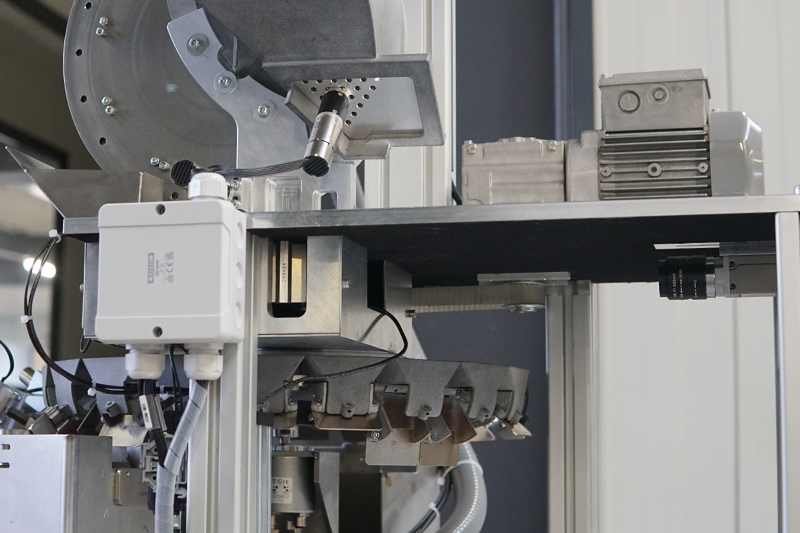
IFSYS offers customized optical sorting systems for products with varying, irregular, or complex geometries. Our technology combines high-resolution sensors, 360° detection, and AI-supported evaluation to maximize product quality, efficiency, and throughput in your production process.

FAQ: Everything you need to know about optical sorting technology


  1. What is optical sorting technology?
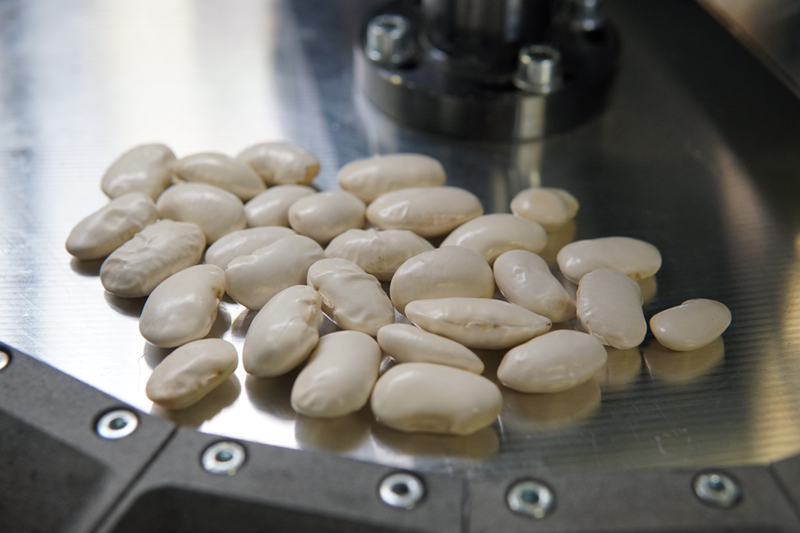
    Optical sorting technology captures the surface of a product without contact, using light, cameras, and sensors. It is used for the reliable classification and sorting of products with varying and complex geometries according to quality, shape, color, or size. (e.g., hazelnuts, beans, or lentils)
     
  2. How does optical sorting of agricultural products work?
    The entire surface of each product is analyzed, not just individual test points. High-resolution sensors detect color and shape deviations, while AI automatically assigns the products to the appropriate quality classes. This eliminates the need for manual sorting, which is often inaccurate and time-consuming.
     
  3. What advantages does optical sorting technology offer compared to manual sorting?
    - Precise classification of products with varying and challenging geometries (agricultural products)
    - High throughput rates with consistent inspection efficiency
    - Objective and reproducible results
    - Gentle handling of products
     
  4. How does artificial intelligence help with optical sorting?
    AI analyzes large image datasets, detects even the smallest deviations, color or shape variations, and reliably assigns the products to the defined quality classes. This ensures that agricultural products are sorted consistently, without human error.
     
  5. What characteristics are detected using AI?
    Color, size, shape, weight, and surface structure. Minor damage, foreign objects, and by-products are also detected.
     
  6. What does 360° all-around view mean?
    Products are captured from all angles, allowing even hard-to-see surface areas to be analyzed reliably. This is particularly important for agricultural products such as hazelnuts, beans, and lentils, which can vary greatly in their natural characteristics.
     
  7. How gently are products sorted?
    The inspection is carried out without contact. Gentle conveyor technology and free-fall systems protect sensitive products from damage – a crucial advantage over manual sorting.
     
  8. How quickly can products be sorted?
    Depending on size and texture, more than 10 items per second can be reliably detected and classified. This is significantly faster than manual sorting, with a significantly lower error rate.
     
  9. In which industries is optical sorting technology used?
    Our systems are specially designed for the agricultural industry, e.g., for hazelnuts, beans, lentils, and other agricultural products.
    However, optical sorting technology can also be used in the following industries:
    •    Food industry
    •    Agriculture / agricultural sector
    •    Plastics processing
    •    Metalworking industries
    •    Other industries where precise quality control is crucial
     
  10. Which products can be sorted reliably?
    In particular, hazelnuts, beans, lentils, and similar agricultural products with varying, irregular, or complex geometries that are difficult to standardize when sorting manually.
     
  11. How can optical sorting technology be integrated into existing production processes?
    Customized systems can be flexibly adapted to different products, conveyor speeds, and classification classes. They integrate seamlessly into existing process chains.
     
  12. Is optical sorting technology worthwhile for small and medium-sized businesses?
    Yes. The technology increases efficiency, quality, and yield and can be customized to individual production requirements.

Further information

You will gladly receive further information about our product range.

Please feel free to ask if you are interested.